
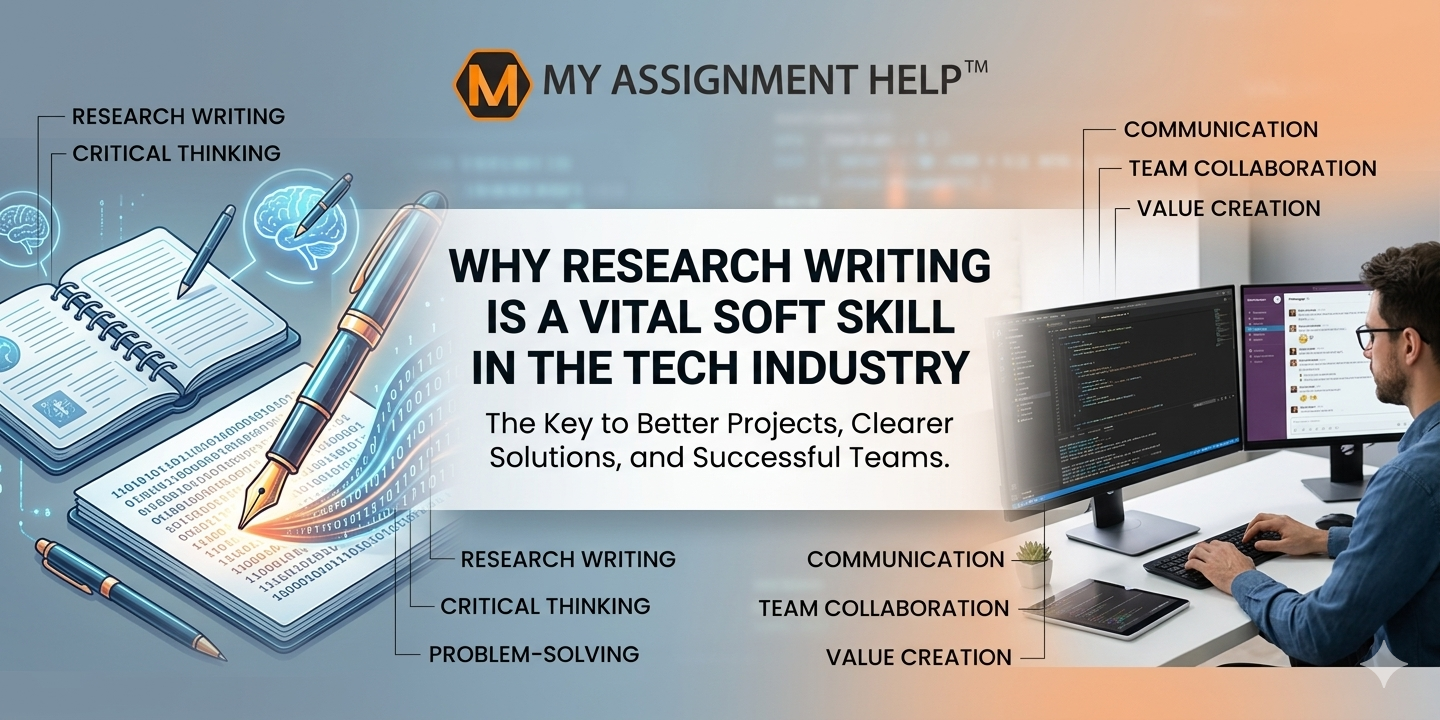
In the high-octane environment of Silicon Valley and the broader US tech landscape, “hard skills” like Python, cloud architecture, or prompt engineering usually take center stage. However, as we move through 2026, a critical realization has dawned on industry leaders: technical brilliance is often bottlenecked by a lack of clear communication. Specifically, Research Writing has emerged not just as an academic requirement, but as a vital soft skill that separates senior-level innovators from entry-level contributors.
The tech industry is no longer just about building products; it is about documenting innovations, justifying R&D spend, and ensuring that complex systems are understandable to cross-functional stakeholders.
The Evolution of the Technical “Soft Skill”
Traditionally, “soft skills” were relegated to teamwork and leadership. Today, the ability to synthesize vast amounts of data into a cohesive report—what we call research writing—is a strategic asset. According to recent 2025-2026 industry surveys, nearly 56% of hiring managers in data-driven sectors report a persistent gap in written communication and problem-solving abilities among new tech hires.
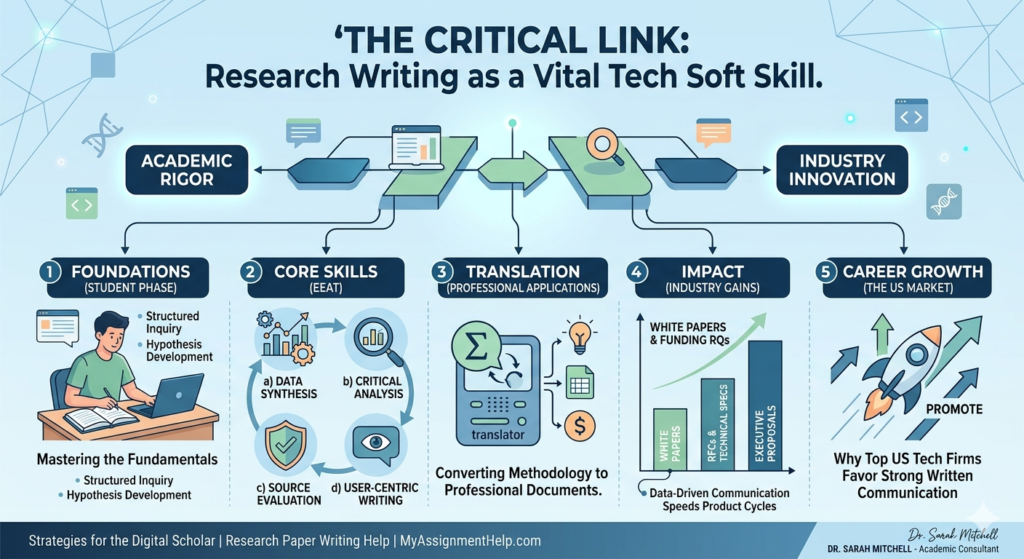
When a software engineer or a data scientist utilizes professional ResearchPaperWritingHelp, they aren’t just looking for academic assistance; they are learning the structural rigor required to present technical findings to non-technical boards. This skill is the “glue” that connects a developer’s logic to a CEO’s strategic vision.
Data-Driven Insights: Why Writing Matters in Tech
The ROI of high-quality research writing is measurable. In regulated US industries like MedTech and FinTech, clear documentation isn’t just a preference—it’s a legal necessity.
- Productivity Gains: Well-documented technical research can reduce developer onboarding time by up to 30%, as clear internal wikis and white papers prevent “knowledge silos.”
- Funding & R&D: The world’s top 2,500 R&D firms invested over $1.4 trillion in research in the last cycle. To access these funds, engineers must write persuasive, data-backed grant proposals and feasibility reports.
- EEAT and Authority: In the age of AI-generated content, Google’s EEAT (Experience, Expertise, Authoritativeness, and Trustworthiness) standards favor content that shows deep, human-led research.
The 2026 Tech Stack: Beyond Code
Today’s “digital scholar’s toolkit” involves more than just an IDE (Integrated Development Environment). It requires an ecosystem of research tools like Zotero, Notion, and AI-integrated proofreading systems. For students and professionals transitioning into the tech workforce, mastering these workflows is essential. Many find that utilizing comprehensive assignment help services allows them to observe high-level technical reporting standards firsthand, which they can then replicate in their professional careers.
Key Takeaways for Tech Professionals
- Clarity Over Complexity: The goal of research writing in tech is to make the complex simple, not the simple complex.
- Bridge the Gap: Use writing to connect technical milestones to business outcomes (ROI).
- Future-Proofing: While AI can draft code, the strategic “why” behind a research project still requires human synthesis and ethical oversight.
FAQ: Research Writing in the Tech Sector
Q: Why is research writing considered a “soft skill”?
A: Because it involves critical thinking, empathy for the reader (user-centricity), and the ability to persuade stakeholders—traits that are fundamentally human and non-automated.
Q: Do software engineers really need to write research papers?
A: While they may not write formal academic papers daily, they write White Papers, RFCs (Request for Comments), and Architectural Decision Records (ADRs), all of which rely on the fundamentals of research writing.
Q: How does research writing help with career promotion?
A: Senior and Staff Engineer roles require the ability to influence others through written proposals. If you cannot document your innovation, it’s as if it never happened in the eyes of the organization.